
BVI Company Types: Structures, Benefits, Requirements, and Uses
The BVI company types available to international entrepreneurs provide flexible structures for holding assets, conducting cross-border business, investment activities, joint ventures, and corporate structuring. The British Virgin Islands (BVI) has developed a widely used corporate framework that supports international businesses while providing a clear legal and regulatory environment.
This guide explains the main BVI company types, the role of BVI international business companies, common BVI company benefits, and the key BVI company requirements that international business owners should understand.
What Are the Main BVI Company Types?
The BVI's corporate framework allows businesses to establish companies for a range of commercial and investment purposes. The most important structure for international entrepreneurs is the BVI Business Company.
Historically, BVI companies were commonly described using categories such as:
- International Business Company (IBC)
- Local company
- Exempt company
- Ordinary company
However, the BVI's modern company law framework consolidated many of these distinctions. Under the BVI Business Companies Act, companies can generally be incorporated as BVI business companies with appropriate corporate powers and characteristics for their intended activities.
As a result, when researching BVI company types, it is important to distinguish between historical terminology and the current legal structure.

The main BVI company types include BCs, LLCs, SPCs, and LPs
BVI Business Company
A BVI Business Company is a flexible corporate entity that can be used for a broad range of lawful business and investment purposes.
Depending on the company's activities, it may function as:
- A holding company
- An investment company
- A trading company
- A joint venture vehicle
- A special purpose vehicle
- An intellectual property holding entity
- A financing or corporate structuring vehicle
- A subsidiary within an international group
The flexibility of the BVI Business Company is one reason the jurisdiction remains relevant to international corporate structuring.
BVI International Business Companies
The term BVI international business companies remains common in searches and older corporate literature. Historically, the BVI International Business Company was a distinct type of offshore company used extensively for international transactions and asset holding.
The BVI later modernized its corporate framework, including the introduction of the Business Companies Act, which brought different company categories into a more unified structure.
Therefore, people searching for a BVI international business company today will generally be referring to a BVI Business Company used for international business purposes rather than a separate modern company category.
This distinction matters when comparing older BVI corporate structures with companies incorporated under the current legal framework.
Why Is the IBC Term Still Used?
The term ''IBC'' remains widely used because it has a long history in offshore corporate services and international business terminology.
You may still encounter references to:
- BVI IBC
- BVI International Business Company
- BVI offshore company
- BVI business company
- BVI holding company
In modern legal and compliance discussions, however, the relevant statutory framework should take priority over informal terminology.
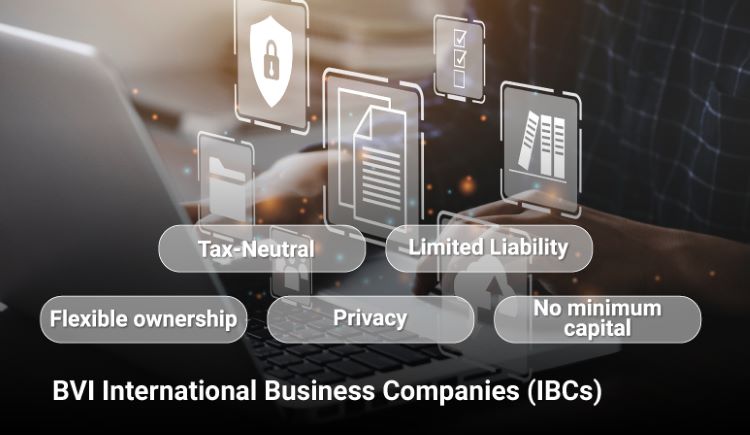
BVI IBCs provide privacy, flexibility, and tax efficiency
Common Uses of BVI Companies
A BVI Business Company can be structured for different legitimate commercial purposes.
Holding Companies
One of the most common uses is holding shares or interests in other companies.
An international group may establish a BVI holding company to own subsidiaries or investments in different jurisdictions.
Investment Structures
BVI companies can be used as investment vehicles for private equity, venture capital, family investment structures, and other investment arrangements, subject to applicable regulatory requirements.
Joint Ventures
A BVI company can provide a corporate framework for two or more investors participating in a joint venture.
The company's constitutional documents and shareholder arrangements can define ownership, governance, voting rights, and transfer mechanisms.
Special Purpose Vehicles
A BVI company may also be used as a special purpose vehicle for a specific transaction, investment, financing arrangement, or asset.
Intellectual Property Holding
Subject to applicable legal and tax requirements, companies can be structured to hold intellectual property rights such as trademarks, patents, or other intangible assets.
International Trading
A BVI company may conduct international commercial activities where permitted. However, businesses should assess licensing, economic substance, tax, sanctions, and regulatory requirements in each relevant jurisdiction before commencing operations.
BVI Company Benefits
There are several potential BVI company benefits that make the jurisdiction attractive for international corporate structures.
Flexible Corporate Structure
BVI companies can generally be structured with significant flexibility regarding ownership and management arrangements, subject to statutory requirements.
This makes them suitable for businesses with international shareholders and directors.
International Recognition
The BVI has an established legal system and a long history of international corporate and financial services.
BVI entities are commonly encountered in cross-border transactions, investment structures, and international corporate groups.
Flexible Share Capital
BVI companies can generally structure their share capital in ways that accommodate different ownership and investment arrangements.
Different classes of shares may also be available where appropriate.
This can be useful for joint ventures, investment structures, and companies with multiple categories of shareholders.
No General Requirement for Local Shareholders
A BVI company can generally be owned by non-BVI individuals or corporate entities, subject to applicable legal and regulatory requirements.
This makes the jurisdiction accessible to international entrepreneurs.
Corporate Structuring Flexibility
BVI companies can be used within more complex international structures involving subsidiaries, holding companies, trusts, partnerships, and investment vehicles.
The appropriate structure depends on the commercial objective and the laws of the jurisdictions involved.
Established Legal Framework
The BVI's corporate system is based on a common-law legal tradition and has developed specialized legislation governing companies and financial services.
This can provide greater familiarity for international investors and professional advisers compared with less established jurisdictions.

BVI company benefits include tax neutrality, privacy, and flexibility
Are BVI Companies Tax-Free?
The phrase ''tax-free BVI company'' is often used in offshore business marketing, but it should be treated carefully.
Incorporating a company in the BVI does not automatically eliminate tax obligations.
The actual tax treatment can depend on:
- Where the company conducts business
- Where management and control occur
- Where shareholders are tax resident
- Where income is generated
- The nature of the company's activities
- Controlled foreign company rules
- Transfer pricing requirements
- Economic substance rules
- Tax treaties and domestic tax laws
- Tax reporting obligations in other jurisdictions
A BVI company may have favorable tax characteristics under BVI law in certain circumstances, but this does not mean its owners can disregard tax obligations in their home countries or other jurisdictions.
International entrepreneurs should obtain professional tax advice before using a BVI company for tax planning or asset structuring.
BVI Company Requirements
The BVI company requirements depend on the company's structure, activities, ownership, and regulatory status.
For a standard BVI Business Company, incorporation generally involves providing information and documentation to an authorized registered agent.
Common requirements can include:
Company Name
The company needs an acceptable name that complies with BVI naming requirements.
Certain words and expressions may require additional approval or may be restricted.
Registered Agent
A BVI company must generally maintain a registered agent in the British Virgin Islands.
The registered agent serves as an important point of contact for statutory and regulatory matters.
Registered Office
The company must maintain a registered office in the BVI.
This provides the company's official local address for statutory purposes.
Directors
A BVI Business Company must have the required number of directors under the applicable framework.
Directors may generally be individuals or corporate entities where permitted, although regulatory and practical considerations should be reviewed.
Shareholders
The company must have at least one shareholder.
Shareholders can generally be individuals or corporate entities, subject to applicable requirements and due diligence.
Corporate Records
The company must maintain appropriate corporate records and statutory information.
Depending on the company and applicable requirements, information relating to directors, shareholders, beneficial ownership, and other corporate matters must be maintained and made available to the relevant authorities or registered agent where required.
BVI Beneficial Ownership Requirements
Beneficial ownership transparency is an important part of modern BVI corporate compliance.
BVI companies cannot simply be treated as anonymous vehicles. Companies and their registered agents have obligations concerning beneficial ownership information under the applicable regulatory framework.
The information collected may include details about individuals who ultimately own or control the company.
This information can be relevant to:
- Corporate due diligence
- Anti-money laundering compliance
- Banking
- Regulatory reporting
- Beneficial ownership verification
International entrepreneurs should therefore expect to provide appropriate identification and ownership documentation during incorporation and ongoing administration.

BVI company requirements include a registered agent and records
Economic Substance Requirements
Certain BVI companies may be subject to economic substance requirements depending on their activities.
Economic substance rules are particularly relevant to companies conducting activities that fall within specified categories of relevant activities.
The potential categories can include activities such as:
- Banking
- Insurance
- Fund management
- Finance and leasing
- Headquarters
- Shipping
- Holding business
- Intellectual property
- Distribution and service centre activities
Not every BVI company is automatically subject to the same economic substance requirements.
The company's actual activities and structure need to be assessed to determine what rules apply.
This is especially important for international groups using BVI companies as holding or investment vehicles.
BVI Company Requirements for Banking
Incorporating a BVI company and opening a bank account are separate processes.
A bank may request extensive information before approving an account, including:
- Certificate of incorporation
- Memorandum and articles
- Register information
- Identification documents
- Proof of residential address
- Source of funds
- Source of wealth
- Business plan
- Expected transaction activity
- Information about customers and suppliers
- Ownership structure
- Tax residency information
The bank's jurisdiction, risk policy, business activity, and ownership profile can all affect the onboarding process.
Therefore, entrepreneurs should not assume that incorporation automatically guarantees access to a particular bank or financial institution.
How to Choose the Right BVI Company Structure
Before incorporating, entrepreneurs should start with the commercial purpose rather than the jurisdiction itself.
Consider the following questions:
What Will the Company Do?
A holding company, trading company, investment vehicle, and regulated business can have very different requirements.
Who Will Own It?
Consider whether ownership will be held directly by individuals, another company, a trust, a partnership, or an investment structure.
Where Will the Business Operate?
The jurisdictions where the company conducts business may have tax, licensing, permanent establishment, and regulatory implications.
Where Are the Owners Tax Resident?
The tax residence of shareholders can affect the treatment of income, distributions, controlled foreign companies, and reporting obligations.
Will the Company Need Banking?
If banking is important, the expected transactions, source of funds, ownership structure, and operating jurisdictions should be considered before incorporation.
Is Economic Substance Relevant?
Companies involved in relevant activities should assess economic substance requirements at the planning stage rather than after incorporation.
Professional Support for BVI Company Formation
Selecting among BVI company types requires more than choosing a company name and submitting incorporation documents. Entrepreneurs should consider the company's intended activities, ownership structure, banking requirements, tax position, economic substance, and ongoing compliance obligations.
Professional corporate service providers can help international entrepreneurs establish and maintain BVI companies while coordinating registered agent, registered office, corporate documentation, and other administrative requirements.
Offshore Company Corp provides international company formation and corporate services for entrepreneurs seeking to establish offshore and international business structures, including support for BVI-related corporate requirements.
Disclaimer
This article is for general informational purposes only and does not constitute legal, tax, or financial advice. Readers should consult qualified professionals before establishing or restructuring a BVI company.




Subscirbe To Our Updates
About Us
We are always proud of being an experienced Financial and Corporate Services provider in the international market. We provide the best and most competitive value to you as valued customers to transform your goals into a solution with a clear action plan. Our Solution, Your Success.
Learn more