
Business Logo Registration in the US: Process, Search, and Cost
In the United States, however, simply creating or using a logo does not automatically provide the same level of protection as registering it as a trademark. Businesses that want stronger federal protection may consider registering their logo with the United States Patent and Trademark Office (USPTO).
Understanding business logo registration in the US is therefore important for companies that are building a brand, expanding into new markets, selling products online, or planning long-term commercial growth.
This guide explains the business logo registration process in the US, how to search for potentially conflicting marks, the factors that affect business logo registration cost in the US, and what businesses should consider before filing.
What Is Business Logo Registration in the US?
In the US, a business logo can potentially be protected as a trademark if it functions as a source identifier for particular goods or services.
A trademark can consist of different elements, including:
- Words
- Names
- Symbols
- Designs
- Logos
- Combinations of words and designs
- Certain other forms of branding
Logo registration is therefore generally handled through the trademark system rather than through a separate federal ''logo registration'' system.
A business may use a logo without registering it federally. However, federal trademark registration can provide additional legal rights and procedural advantages that are not automatically obtained simply by creating a logo.
The precise scope of protection depends on the mark, the goods or services covered, the filing basis, and other legal circumstances.
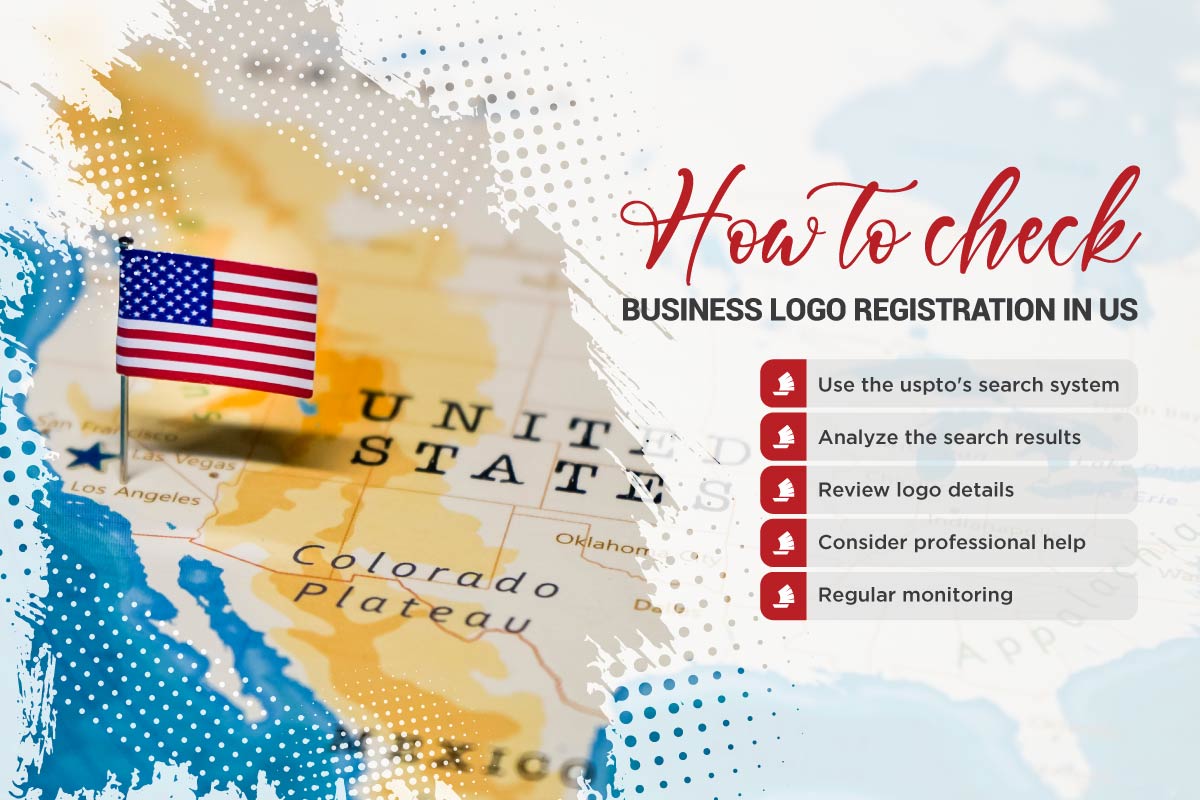
How to Check Business Logo Registration in US
Trademark vs Business Logo Registration
The terms ''logo registration'' and ''trademark registration'' are often used interchangeably, but they are not technically identical.
A logo is the visual design used by a business.
A trademark is a legal designation for a mark that identifies and distinguishes the source of goods or services.
For example, a company may have:
- A company name
- A wordmark
- A stylized logo
- A slogan
- A product name
Each element can raise different trademark considerations.
A business may therefore decide to protect the name separately from the logo if both are commercially important.
This is particularly relevant because trademark rights generally depend on how a mark is used in connection with specific goods or services.
Why Register a Business Logo in the US?
Federal trademark registration can provide several potential advantages to businesses that meet the legal requirements.
Nationwide Protection
A federal registration can establish important nationwide rights in the registered mark, subject to the applicable legal framework and limitations.
This can be particularly valuable for businesses selling products or services across multiple US states.
Public Notice
A federal registration places the mark on the USPTO's Principal Register or, in some circumstances, Supplemental Register.
This can provide public notice of the registrant's claim to trademark rights.
Enforcement Advantages
Registration can provide additional procedural and legal advantages in certain trademark disputes.
It may also make it easier for a business to demonstrate its claimed rights when dealing with potential infringement.
Brand Development
A registered trademark can become an important intangible business asset.
Companies may use trademarks as part of broader strategies involving:
- Licensing
- Franchising
- Brand expansion
- Investment
- Mergers and acquisitions
- International expansion
However, registration does not mean that every use of a similar logo by another party is automatically infringement. Trademark rights are affected by factors such as the similarity of the marks, relatedness of goods or services, geographic considerations, and likelihood of consumer confusion.
Business Logo Registration Process in US
The business logo registration process in US generally involves several stages.
1. Develop the Logo
Before filing, the business should have a clear version of the logo it intends to protect.
Consider whether the logo contains:
- A business name
- Initials
- Graphic elements
- Stylized lettering
- Colors
- Taglines
- Other distinctive elements
A business should also consider whether it expects the logo to change substantially in the near future.
A trademark application identifies the mark being registered. Significant changes to the design may require separate consideration rather than being automatically covered by an earlier registration.
2. Determine Who Owns the Trademark
Ownership should be established before filing.
The applicant may be an individual, corporation, LLC, partnership, or other eligible legal entity depending on the circumstances.
This step is important because filing under the wrong owner can create serious problems later.
For example, if a logo is actually owned and used by a company but the application is filed in an individual's name without an appropriate legal basis, correcting the ownership structure may become complicated.
3. Identify the Goods or Services
Trademark protection is connected to specific goods and services.
The business must identify what it actually provides or sells under the logo.
Examples might include:
- Clothing
- Software
- Consulting services
- Restaurant services
- Financial services
- Online retail
- Manufacturing
- Marketing services
Choosing appropriate descriptions and classifications is an important part of the application.
The goal is not simply to list as many products or services as possible. The application should accurately reflect the business's legitimate trademark use or intended use under the applicable filing basis.
4. Conduct a Trademark Search
Before filing, businesses should investigate whether similar trademarks already exist.
This is one of the most important stages of the registration process.
A search should not be limited to finding an identical logo. Potential conflicts can arise from marks that are visually, phonetically, or conceptually similar.
The search should also consider whether the existing marks cover related goods or services.
5. Select the Filing Basis
US trademark applications can be filed under different legal bases.
Common bases include:
- Use in commerce
- Intent to use
- Certain applications based on foreign registrations or foreign applications
The appropriate basis depends on the applicant's circumstances.
Businesses should not select a filing basis simply because it appears convenient. The applicant must satisfy the applicable legal requirements.
6. Submit the USPTO Application
Once the information is prepared, the application can be submitted to the USPTO.
The application generally identifies:
- Applicant information
- The mark
- Goods or services
- Filing basis
- Specimen, where required
- Other required information
Government filing fees apply, and the amount can depend on the application requirements and filing circumstances.
7. USPTO Examination
After filing, the application is assigned for examination.
A USPTO examining attorney reviews the application and may issue an Office action if there are substantive or procedural issues.
Potential issues can include:
- Likelihood of confusion
- Merely descriptive wording
- Identification of goods or services
- Specimen problems
- Ownership issues
- Filing errors
- Other statutory requirements
An applicant may need to respond within the applicable deadline.
8. Publication and Registration
If the application clears examination and other requirements, it may proceed toward publication.
For applications that proceed successfully without opposition or after applicable proceedings are resolved, the trademark can ultimately be registered.
For an intent-to-use application, additional steps may be required before registration because the applicant must establish qualifying use in commerce or satisfy the applicable requirements for an extension.

Certificate of Registration for Business in US
How to Check Business Logo Registration in US
Before investing in a new logo, businesses should conduct a trademark search.
The how to check business logo registration in US process starts with the USPTO's trademark search resources.
Search for the Exact Logo or Name
Begin by looking for identical or nearly identical marks.
If the logo contains a distinctive business name, search that wording separately as well.
For example, a company should not search only for the exact visual design. A word component may already be registered by another business.
Search Similar Spellings
Consider variations such as:
- Different spelling
- Singular and plural forms
- Abbreviations
- Phonetic equivalents
- Alternative word combinations
A trademark conflict does not necessarily require two marks to be identical.
Search Design Elements
For logos that contain significant graphic elements, design-related searching may also be relevant.
A logo's visual similarity can matter even when the wording differs.
Check Related Goods and Services
A similar mark may not necessarily create a conflict if the goods or services are unrelated.
For example, two businesses could potentially use similar wording in completely different commercial fields without creating the same level of trademark concern.
The analysis is fact-specific, so a search result should not automatically be treated as a definitive legal conclusion.
Search State Trademark Records
Federal registration is not the only source of trademark information.
Businesses may also need to consider:
- State trademark registrations
- State business records
- Common-law trademark use
- Commercial websites
- Marketplace listings
- Industry directories
A business that does not find an identical federal registration should therefore avoid assuming that the proposed logo is completely risk-free.
Business Logo Registration Cost in US
The business logo registration cost in US depends on several factors.
The most obvious expense is the government filing fee paid to the USPTO. However, the total cost can be higher when professional assistance, trademark searching, responses to Office actions, or other services are required.
Typical cost categories include:
USPTO fees can change, and the amount payable depends on the application and filing requirements in effect at the time of submission.
Businesses should therefore verify the current USPTO fee schedule before budgeting for registration.
Logo Registration vs Business Name Registration
Registering a company with a state does not automatically give the business exclusive federal trademark rights in its name or logo.
These are separate legal processes.
For example:
Business entity registration: establishes an LLC, corporation, or other legal entity under applicable state law.
Trademark registration: protects a qualifying mark used to identify particular goods or services.
A company could therefore have a legally registered business entity while another party has relevant trademark rights involving a similar name.
Businesses should consider corporate registration and trademark protection separately when developing a brand.
Maintaining a US Trademark Registration
Registration is not necessarily the end of the compliance process.
Trademark owners generally have continuing obligations, including required maintenance filings during specified periods and continued qualifying use where applicable.
Owners should maintain:
- Evidence of trademark use
- Records of relevant goods and services
- Ownership documentation
- Renewal and maintenance deadlines
- Copies of USPTO correspondence
A registered mark can be vulnerable to cancellation or other legal challenges in certain circumstances, including issues involving nonuse.
Disclaimer
This article is for general informational purposes only and does not constitute legal, trademark, or business advice. Readers should consult qualified professionals before making trademark or brand-protection decisions.




Subscirbe To Our Updates
About Us
We are always proud of being an experienced Financial and Corporate Services provider in the international market. We provide the best and most competitive value to you as valued customers to transform your goals into a solution with a clear action plan. Our Solution, Your Success.
Learn more