
Business License in Singapore: Commercial, Online, Retail, and Store Licenses (2026)
Registering a company with ACRA does not automatically authorise every type of business activity in Singapore. Whether an additional licence or permit is required depends on what the business does, what it sells, and in some cases where it operates.
Understanding the requirements for a business license in Singapore is therefore essential. The appropriate license depends on factors such as your industry, business activities, premises, products, and whether you operate online or from a physical location.
This guide explains the main types of Singapore business licenses, including commercial license in Singapore, online business license in Singapore, retail license in Singapore, and store license in Singapore, as well as how to determine which approvals your business may need.
What Is a Business License in Singapore?
A business licence or permit is an approval required for certain regulated activities, products, or premises in Singapore. It is separate from registering a business or company with ACRA.
Singapore generally does not have one universal license that every company must obtain after incorporation. Instead, licensing requirements are activity-specific.
For example, a consulting company may be able to begin operations after incorporation without obtaining a sector-specific license, while a restaurant, retail shop, employment agency, or financial services company may require additional approvals.
This distinction is important because company incorporation and business licensing are two separate processes.

Business license and company registration requirements in Singapore
Company Registration vs Business Licensing
When establishing a company, entrepreneurs generally deal with the Accounting and Corporate Regulatory Authority (ACRA) for incorporation and business registration.
Licensing, however, may involve other government agencies depending on the business activity.
Therefore, registering a Singapore company does not automatically mean that every business activity is authorized.
Does Every Business Need a License in Singapore?
No. Many businesses do not need a separate sector-specific licence after registration. Additional approvals are more likely where the business involves regulated activities, products, professions, or premises.
Examples include:
- Food and beverage businesses
- Retail businesses selling regulated products
- Financial services
- Employment agencies
- Travel agencies
- Education providers
- Healthcare businesses
- Import and export activities
- Construction and building services
- Liquor-related businesses
- Certain entertainment activities
The safest approach is to identify your exact business activities first and then determine whether additional licenses apply.
Is There a Commercial Licence in Singapore?
Singapore does not generally issue a single commercial licence for ordinary business activities. The licences or permits required depend on the company's specific activities and products.
For example, a company operating a general consultancy may not need a sector-specific license, while a company operating a restaurant could require food-related approvals and premises compliance.
Therefore, entrepreneurs should avoid assuming that obtaining a general business registration automatically provides permission to conduct regulated activities.

Commercial business activities requiring licenses in Singapore
Examples of Commercial Activities Requiring Additional Approval
Depending on the business model, additional licensing may apply to:
- Selling food and beverages
- Operating a physical retail outlet
- Importing controlled goods
- Providing financial services
- Recruiting workers
- Operating childcare services
- Providing certain educational services
- Selling tobacco or alcohol
- Running specific entertainment businesses
The relevant government authority and application process will depend on the activity.
| Business activity | Typical regulator | Example licence / approval |
|---|---|---|
| Restaurant / café | Singapore Food Agency | Food Shop Licence |
| Liquor sales | Singapore Police Force | Liquor Licence |
| Employment agency | Ministry of Manpower | Employment Agency Licence |
| Travel agency | Singapore Tourism Board | Travel Agent Licence |
| Financial services | Monetary Authority of Singapore | Activity-specific MAS authorisation |
| Controlled imports/exports | Singapore Customs + competent authority | TradeNet permit and, where required, product-specific authorisation |
Do Online Businesses Need a Licence in Singapore?
There is no universal licence required simply because a business operates online. However, an online business must still satisfy business-registration requirements and any sector-specific rules that apply to its products or services.
For Example
An online clothing store may primarily need to comply with company registration, consumer protection, tax, and e-commerce requirements.
By contrast, an online business selling regulated products may require additional licenses or approvals.
The key question is therefore not simply: ''Is my business online?''
Instead, ask: ''What exactly am I selling, and is that activity regulated?''
Starting an Online Business in Singapore
For entrepreneurs establishing an online business, the process generally begins with choosing an appropriate business structure.
Common options include:
- Sole proprietorship
- Partnership
- Limited liability partnership
- Private limited company
For international entrepreneurs and growing e-commerce businesses, a Singapore private limited company is often considered because it provides a separate legal entity and limited liability.
Once the business is registered, owners should evaluate:
- Business activity classification
- GST obligations
- Consumer protection requirements
- Data protection requirements
- Payment processing
- Import/export regulations
- Industry-specific licensing
Do Retail Shops Need a Licence in Singapore?
There is no universal retail licence for every shop in Singapore. A retailer may need specific approvals depending on the products sold, the premises used, and any regulated activities carried out.
General Retail Businesses
A standard retailer selling ordinary consumer products may primarily need:
- Proper business registration
- Suitable premises
- Compliance with planning and building requirements
- Consumer protection compliance
- Employment compliance
- Tax registration where applicable
However, businesses selling regulated products may require additional licenses.
Retail Businesses Selling Regulated Products
Additional regulatory requirements may apply when retailers sell products such as:
- Alcohol
- Tobacco
- Pharmaceuticals
- Certain food products
- Controlled goods
- Specific chemicals
- Medical devices
The exact requirements depend on the product category.
This is why a retail business should identify its products before determining its licensing requirements.
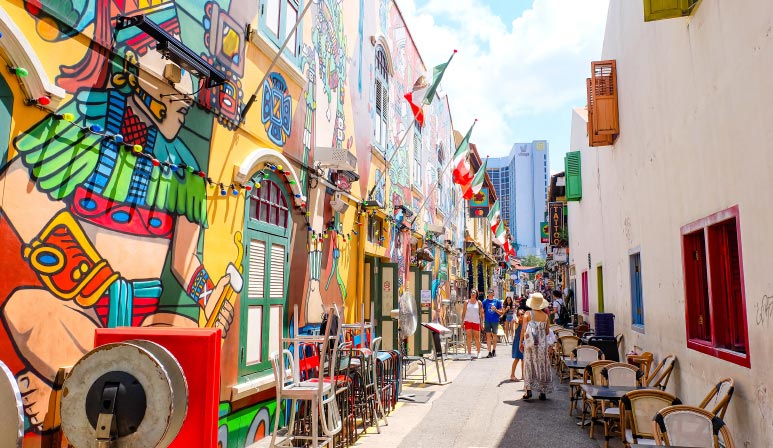
Retail business in Singapore selling regulated products
Licensing and Premises Requirements for Physical Stores
A physical shop may be subject to both activity-specific licensing and premises-related requirements. Before committing to a lease, businesses should confirm that the intended use is permitted and identify any planning, fire-safety, renovation, signage, or sector-specific approvals that may apply.
For example, a restaurant operating from a commercial unit has very different licensing requirements from a clothing boutique.
Premises Requirements for Physical Stores
Before signing a long-term commercial lease, entrepreneurs should verify that the premises can legally be used for the intended business activity.
This can involve checking:
- Approved use of the premises
- Building requirements
- Fire safety requirements
- Renovation permissions
- Signage regulations
- Accessibility requirements
This step is particularly important because obtaining a suitable business license does not necessarily resolve every premises-related requirement.
Common Business Licenses and Permits in Singapore
Singapore's licensing system covers a broad range of industries.
Here are some common examples.
Food Shop License
Restaurants, cafés, bakeries, food courts, and other food establishments may require a Food Shop Licence or another applicable permit from the Singapore Food Agency (SFA), depending on the business format.
Liquor License
Businesses selling or supplying liquor generally require an appropriate liquor license.
Requirements may vary depending on:
- Type of liquor
- Method of sale
- Operating hours
- Premises
Employment Agency License
Businesses providing employment agency services generally require licensing from the relevant authority.
This applies to companies involved in recruiting or placing workers.
Travel Agency License
Businesses carrying on regulated travel-agent activities may require a Travel Agent Licence from the Singapore Tourism Board. Singapore currently offers Niche and General Travel Agent Licences, with different permitted activities and financial requirements.
Financial Services Licensing
Financial services are heavily regulated in Singapore.
Businesses providing regulated financial activities may require authorization from the Monetary Authority of Singapore (MAS).
This can include activities involving:
- Payments
- Capital markets
- Fund management
- Financial advisory services
- Certain digital payment activities
A company should never assume that incorporation alone permits it to provide regulated financial services.

Applying for a business license and regulatory approval in Singapore
How to Apply for a Business License in Singapore
The exact procedure depends on the license required.
However, the general process can be summarized as follows.
Step 1: Identify Your Business Activity
Clearly define what your company will do.
For example:
- Retail clothing
- Restaurant
- Online marketplace
- Consulting
- Import/export
- Financial services
The more precise the description, the easier it becomes to identify applicable regulations.
Step 2: Check Licensing Requirements
Determine which government agencies regulate your activities.
Some businesses may require only general compliance, while others may need multiple approvals.
Step 3: Prepare Supporting Documents
Depending on the license, documents may include:
- Company registration details
- Identification documents
- Business address
- Lease agreement
- Floor plans
- Product information
- Professional qualifications
- Financial information
- Operational procedures
Step 4: Submit the Application
Many government licensing services are available through Singapore's digital government platforms.
Applications should contain accurate information because incomplete submissions can cause delays.
Step 5: Inspection or Approval
Certain activities may require:
- Premises inspection
- Technical assessment
- Background checks
- Professional qualification verification
Once requirements are satisfied, the relevant authority issues the required approval.
How Much Does a Business License in Singapore Cost?
There is no single standard cost for a business license in Singapore.
Fees depend entirely on the type of license.
For example:
- General company registration has its own government fees.
- Food-related licenses have separate fees.
- Liquor licenses have different fee structures.
- Professional and financial licenses can involve substantially different costs.
Entrepreneurs should therefore calculate licensing costs based on their actual business model rather than relying on a generic ''business license fee.''
How Long Does It Take to Get a Singapore Business License?
Processing times vary according to the license and whether additional assessment is required.
Simple applications may be processed relatively quickly, while regulated industries may require:
- Background checks
- Premises inspections
- Professional assessments
- Additional documentation
Planning licensing applications early can prevent delays to a planned launch.
Business License Requirements for Foreign Entrepreneurs
Singapore is highly accessible to international entrepreneurs, but foreign-owned businesses must still comply with local rules.
Depending on the business structure, foreign entrepreneurs may need:
- A Singapore-registered entity
- Local registered office
- Resident director requirements
- Appropriate immigration or work authorization if working in Singapore
- Sector-specific licenses
Foreign ownership does not remove Singapore's licensing requirements. Depending on the activity, the licence applicant may need to meet local-entity, key-personnel, premises, or professional-qualification requirements.
Separately, owning shares in a Singapore company does not by itself grant the right to work in Singapore. Any required immigration or work authorisation is a separate matter from business registration and licensing.

Foreign entrepreneur establishing a licensed business in Singapore
Online vs Physical Businesses: How Licensing Requirements Differ
An online business can sometimes have fewer premises-related requirements than a physical store, but that does not mean it is unregulated.
| Factor | Online Business | Physical Store |
|---|---|---|
| Company registration | Required where applicable | Required where applicable |
| Premises requirements | Usually lower | Often applicable |
| Consumer regulations | Applicable | Applicable |
| Product licensing | May apply | May apply |
| Signage approval | Usually not applicable | May apply |
| Food licensing | Depends on activity | Often applicable |
The most important factor remains the nature of the products or services.
Common Mistakes When Applying for a Business License
Entrepreneurs can avoid many problems by planning licensing requirements before launching.
Mistake 1: Assuming Incorporation Equals Licensing
Company registration does not automatically authorize regulated activities.
Mistake 2: Applying for the Wrong License
Using a generic description of the business may lead to an incorrect licensing assessment.
Mistake 3: Signing a Lease Too Early
A location may not be approved for the intended business activity.
Mistake 4: Ignoring Product-Specific Regulations
Certain products require additional approvals even when sold online.
Mistake 5: Starting Operations Before Approval
Operating a regulated business without the necessary authorization can result in penalties or enforcement action.
How to Maintain a Business License in Singapore
Obtaining a license is only the beginning.
Depending on the license, businesses may need to:
- Renew periodically
- Maintain operational standards
- Submit reports
- Keep records
- Notify authorities of changes
- Maintain professional qualifications
- Comply with premises requirements
Companies should establish a compliance calendar to avoid missed deadlines.
Why Professional Assistance Can Be Valuable
Singapore's regulatory environment is highly organized, but licensing can become complicated when a business operates across several sectors or jurisdictions.
Professional corporate service providers can help entrepreneurs:
- Identify relevant licensing requirements
- Prepare corporate documents
- Establish Singapore companies
- Coordinate applications
- Maintain corporate compliance
- Support banking and accounting arrangements
Offshore Company Corp supports Singapore company formation and related corporate services, including registered-office, company-secretarial, nominee-director, and accounting/compliance support. Sector-specific licence requirements should be confirmed with the relevant regulator or an appropriately qualified specialist.
FAQs:
Does every business need a licence in Singapore?
No. Singapore does not require every registered business to obtain a general operating licence. Additional licences or permits apply mainly to regulated activities, products, professions, or premises.
Is there a general commercial licence in Singapore?
No. Singapore generally uses activity-specific licensing rather than one universal commercial licence.
Do I need a licence to sell online in Singapore?
There is no universal online-business licence. However, online businesses must still satisfy applicable registration, consumer, data-protection, tax, and sector-specific regulatory requirements.
Do retail shops need a licence in Singapore?
Not simply because they are retail shops. Additional approvals may apply because of the products sold, premises, signage, food handling, liquor sales, or other regulated activities.
Where can I check which licence my Singapore business needs?
GoBusiness provides licensing services and tools for many Singapore business activities, while some sectors use the relevant regulator's own application system.
Conclusion
Singapore's licensing system is activity-based. The practical starting point is to define exactly what the business will do, what it will sell, and where it will operate, then check whether those activities require approval from GoBusiness or the relevant regulator before launch.
Disclaimer
This article is for general informational purposes only and does not constitute legal, tax, or regulatory advice. Licensing requirements may vary depending on the business activity and circumstances.




Subscirbe To Our Updates
About Us
We are always proud of being an experienced Financial and Corporate Services provider in the international market. We provide the best and most competitive value to you as valued customers to transform your goals into a solution with a clear action plan. Our Solution, Your Success.
Learn more