
US Company Doing Business in Europe: Expansion, EU Rules, and Key Considerations
A US company doing business in Europe can access a large and diverse market, but expanding across the Atlantic involves more than simply selling products or services to European customers. Depending on the company's activities, location, industry, and operating model, it may need to consider corporate taxation, VAT, employment rules, data protection, customs, product regulations, and local registration requirements.
This guide explains what US businesses should consider when expanding into Europe, including the difference between selling into Europe and establishing a local presence, the role of the EU, and key differences between European companies vs American companies.
What Does It Mean for a US Company to Do Business in Europe?
A US company doing business in Europe may operate in the region in several different ways.
The simplest model is cross-border selling from the United States. A US company may sell goods or services directly to European customers without establishing a European subsidiary.
A more substantial presence may involve:
- Hiring employees in Europe
- Establishing a European subsidiary
- Opening a branch
- Maintaining an office or warehouse
- Appointing local distributors
- Using European sales representatives
- Holding inventory in an EU country
- Establishing a regional headquarters
- Acquiring a European company
- Entering joint ventures with European businesses
The appropriate structure depends heavily on the company's commercial activities and the countries involved.
A company selling software remotely into several European markets may have very different obligations from a US manufacturer operating warehouses and employees in Germany, France, and the Netherlands.

U.S. Companies doing Business in Europe should have several strategic approaches
Why Are US Companies Expanding Into Europe?
There are several commercial reasons why US companies that have expanded internationally often consider Europe an important region.
Access to Large Consumer Markets
Europe contains numerous developed economies with substantial purchasing power. For US companies with established products, entering European markets can create opportunities to diversify revenue and reach new customers.
Regional Business Opportunities
The EU's integrated market can make regional expansion more efficient in areas where common rules apply. A company that establishes operations in one EU country may be able to develop a broader European strategy, although regulatory requirements still need to be assessed on a country-by-country basis.
Access to Talent
European countries offer significant pools of workers across technology, engineering, finance, manufacturing, research, and professional services.
For US companies seeking international talent, Europe can therefore be relevant for both sales and operational expansion.
Diversification
International expansion can reduce dependence on one domestic market. However, diversification does not eliminate business risk. Currency movements, geopolitical developments, local competition, regulatory changes, and differences in consumer behavior can all affect international operations.
Selling to Europe From the United States vs Establishing a European Entity
One of the first decisions for an American business is whether it actually needs a European legal entity.
Selling Cross-Border From the US
A company may initially serve European customers directly from the United States.
This approach can be suitable for businesses that:
- Have limited European sales
- Operate primarily online
- Do not need local employees
- Do not maintain European inventory
- Use third-party logistics providers
- Want to test demand before making a larger investment
However, the absence of a European subsidiary does not necessarily mean that the company has no European tax or regulatory obligations.
VAT, customs, consumer protection, digital regulations, and permanent-establishment considerations may still apply depending on the business model.
Establishing a European Subsidiary
A US parent company may establish a subsidiary in an EU member state when it needs a more permanent operating presence.
A subsidiary can be useful for:
- Employing local staff
- Signing local contracts
- Leasing premises
- Managing European sales
- Holding inventory
- Establishing local banking relationships
- Building a regional management team
The subsidiary is generally a separate legal entity from its US parent, although the parent may own all or part of it.
Establishing a Branch
A branch can provide another way to establish a local presence without creating a completely separate subsidiary.
The legal and tax treatment of a branch varies by country. Businesses should therefore compare the consequences of a branch with those of a subsidiary before choosing a structure.
Understanding the EU Market
The European Union (EU) is a political and economic union whose member states participate in a single market framework. However, the EU should not be treated as if every business requirement is identical across all member states.
EU-level rules can cover areas such as:
- Data protection
- Competition
- Consumer protection
- Product standards
- Digital services
- Environmental requirements
- Customs
- Certain tax rules
Individual countries retain authority over many important areas, including corporate income tax, employment law, company registration, and various licensing requirements.
As a result, a US company should distinguish between EU-wide requirements and national requirements.
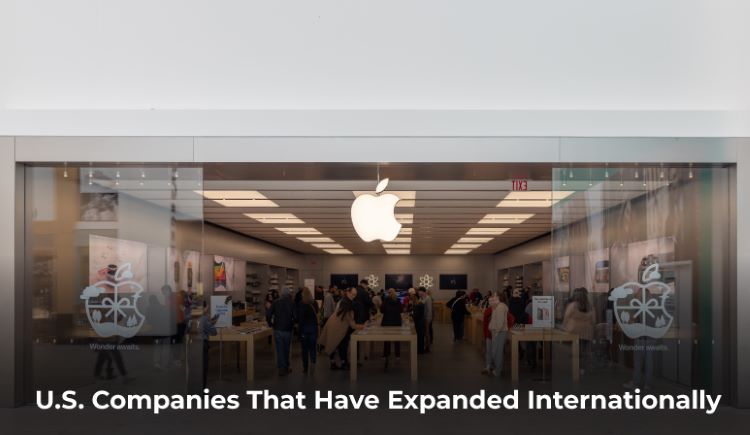
Various U.S. Companies That Have Expanded Internationally with impressive success
What Is the US Mission to the EU?
The US Mission to the EU represents the United States in its relationship with the institutions of the European Union.
For businesses, information from US government institutions can provide useful background on US-EU commercial relations, trade policy, regulatory developments, and market access issues.
However, the US Mission to the EU is not a substitute for legal or tax advice concerning a company's specific European operations.
An American business planning an expansion should also review information from relevant EU institutions and the national authorities in each country where it plans to operate.
Tax Considerations for a US Company Doing Business in Europe
Tax is one of the most important areas to analyze before establishing European operations.
A US company can potentially have obligations in both the United States and Europe. The exact treatment depends on factors such as:
- Where the company operates
- Where employees work
- Where contracts are negotiated
- Where management decisions are made
- Where goods are stored
- Where customers are located
- Whether the company has a permanent establishment
- The type of income generated
- Applicable tax treaties
- Transfer pricing arrangements
Corporate Income Tax
EU member states generally impose their own corporate income tax systems.
There is therefore no single EU corporate income tax rate that applies to every business operating in Europe.
A US company with a European subsidiary will generally need to understand the corporate tax rules of the country where that subsidiary is established and where it conducts business.
Permanent Establishment
A US company may create a taxable presence in another jurisdiction without formally incorporating a subsidiary.
This can occur through a permanent establishment, depending on the company's activities and the applicable tax rules.
Factors such as a fixed place of business or certain activities conducted by personnel may be relevant.
The specific definition depends on applicable domestic law and tax treaties, so companies should obtain professional advice before assuming that operating remotely eliminates European tax exposure.
Transfer Pricing
When a US parent company and European subsidiary conduct transactions with each other, transfer pricing rules may apply.
Examples include:
- Management services
- Intellectual property licensing
- Financing
- Product purchases
- Shared services
- Intercompany loans
Businesses should maintain appropriate documentation and establish commercially supportable arrangements.
VAT and Indirect Taxes
VAT is another major consideration for a US company doing business in Europe.
VAT is a consumption tax used throughout the EU, although rates and administrative requirements vary by member state.
A US company may encounter VAT obligations when it:
- Sells goods to European customers
- Imports products into the EU
- Stores inventory in Europe
- Provides certain digital services
- Sells directly to consumers
- Operates through a European subsidiary
The VAT treatment depends on the transaction, customer type, location, and nature of the goods or services.
Companies should not assume that US sales tax concepts can simply be transferred to European operations.

U.S. Mission help its companies with the EU’s economic matters and policies
European Companies vs American Companies
The differences between European companies vs American companies are not simply a matter of business culture. Corporate structures, taxation, employment rules, accounting, governance, and regulatory expectations can differ significantly.
These are broad distinctions rather than universal rules. European countries are not legally identical, just as US states do not have identical corporate requirements.
=> Learn more: US Company Formation Services
Common Structures Used by US Companies in Europe
There is no single structure suitable for every international expansion.
US Parent + EU Subsidiary
The US company remains the parent while a European subsidiary conducts regional operations.
This can provide a clear separation between the US parent and European operating entity.
US Parent + European Branch
A branch can provide local operations without forming a separate subsidiary.
Its legal and tax consequences need to be assessed in the relevant country.
US Company + European Distributor
A US company can work with independent European distributors instead of establishing its own operating entity.
This can reduce the need for direct infrastructure but gives the company less control over distribution.
US Company + Employer of Record
For certain employment arrangements, a company may use an employer-of-record provider to hire workers in another country without immediately establishing its own local subsidiary.
The suitability of this model depends on the company's activities and the relevant country's employment and tax rules.
Challenges for US Companies Expanding Into Europe
International expansion can create several practical challenges.
Regulatory Fragmentation
Although the EU has harmonized rules in many areas, national requirements remain important.
Cultural and Commercial Differences
Customer expectations, negotiation styles, pricing models, and business practices can differ between European markets and the US.
Currency Exposure
Not every European country uses the euro. Businesses operating across multiple currencies may need appropriate foreign-exchange and treasury strategies.
Compliance Costs
Maintaining tax, accounting, payroll, legal, and regulatory compliance across several countries can become expensive.
Management Complexity
A company operating in multiple jurisdictions needs reliable processes for contracts, reporting, data management, and corporate governance.
How US Companies Can Prepare for European Expansion
A structured approach can reduce avoidable problems.
1. Define the European Business Model
Determine whether the company will sell remotely, use distributors, hire employees, maintain inventory, or establish a local entity.
2. Identify Target Countries
Do not treat Europe as one uniform market. Identify the countries where customers, employees, suppliers, or assets will actually be located.
3. Review Tax Exposure
Assess corporate tax, VAT, withholding taxes, permanent establishment, transfer pricing, and the interaction with US tax obligations.
4. Check Regulatory Requirements
Review industry-specific rules, product standards, consumer protection, privacy, licensing, and other applicable regulations.
5. Select the Legal Structure
Compare a subsidiary, branch, distributor arrangement, or other operating model.
6. Build a Compliance Calendar
Track tax filings, VAT returns, payroll, corporate filings, licenses, and other recurring obligations.
7. Review Contracts
International contracts should address governing law, jurisdiction, payment terms, intellectual property, data protection, and dispute resolution where appropriate.
Professional Support for International Expansion
Expanding a US business into Europe requires coordination between corporate structure, tax, accounting, regulatory compliance, and international operations.
Companies that are still deciding between a US-only structure and an international operating structure may benefit from professional guidance before committing to a particular jurisdiction or entity.
For businesses considering international company formation, banking, corporate structuring, and related services, Offshore Company Corp can assist with cross-border corporate administration and international business structures.
Disclaimer
This article is for general informational purposes only and does not constitute legal, tax, or financial advice. Readers should consult qualified professionals before expanding a US business into Europe.




Subscirbe To Our Updates
About Us
We are always proud of being an experienced Financial and Corporate Services provider in the international market. We provide the best and most competitive value to you as valued customers to transform your goals into a solution with a clear action plan. Our Solution, Your Success.
Learn more